

The Problem Already Existed
The map is wrong, not the traveler.

This post is shared freely. To support my work, please upgrade to a paid subscription.
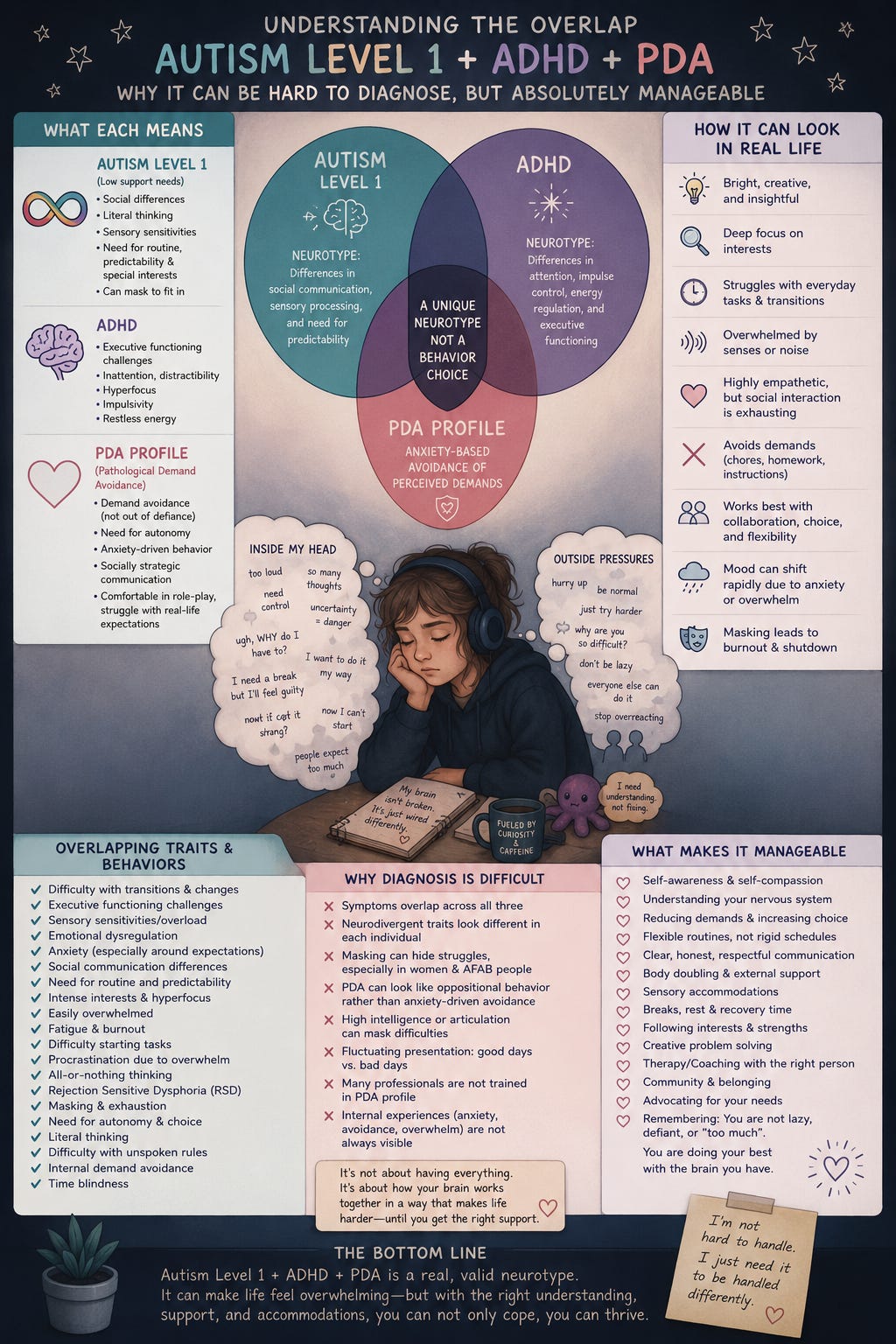
Sometimes I wonder if one of the reasons people react so strongly to late neurodivergent diagnosis is because they misunderstand what is actually happening.
When someone discovers they are autistic, ADHD, or otherwise neurodivergent later in life, people often respond as though a new problem has suddenly appeared. The diagnosis enters the room and all at once it becomes the thing under scrutiny, as though that piece of paper or that new understanding is what changed everything.
But from my side of the experience, nothing could be further from the truth.
The problem already existed.
The consequences already existed.
The exhaustion already existed.
I spent years carrying consequences for things I could not explain. There were relationships strained by misunderstandings, projects abandoned halfway through, routines that worked beautifully for a week before collapsing without warning, and an ever-present sense that everyone else had received instructions for life that I somehow missed.
I did not move through those years untouched by my neurodivergence simply because I lacked the language for it. In many ways, I think I was more affected by it because I lacked the language.
Without an explanation, every difficulty became a question of character.
Why couldn't I keep up?
Why couldn't I maintain what everyone else seemed able to maintain?
Why did ordinary things leave me exhausted?
Why did certain sounds, expectations, interruptions, or demands feel so overwhelming?
Why did I need so much recovery time after experiences that barely seemed to register for other people?
The answers I was given rarely had anything to do with neurology. Instead, they sounded like judgments.
Maybe I wasn't disciplined enough.
Maybe I wasn't trying hard enough.
Maybe I cared less than everyone else.
Maybe I was too sensitive.
Maybe I was difficult.
Maybe I was making excuses.
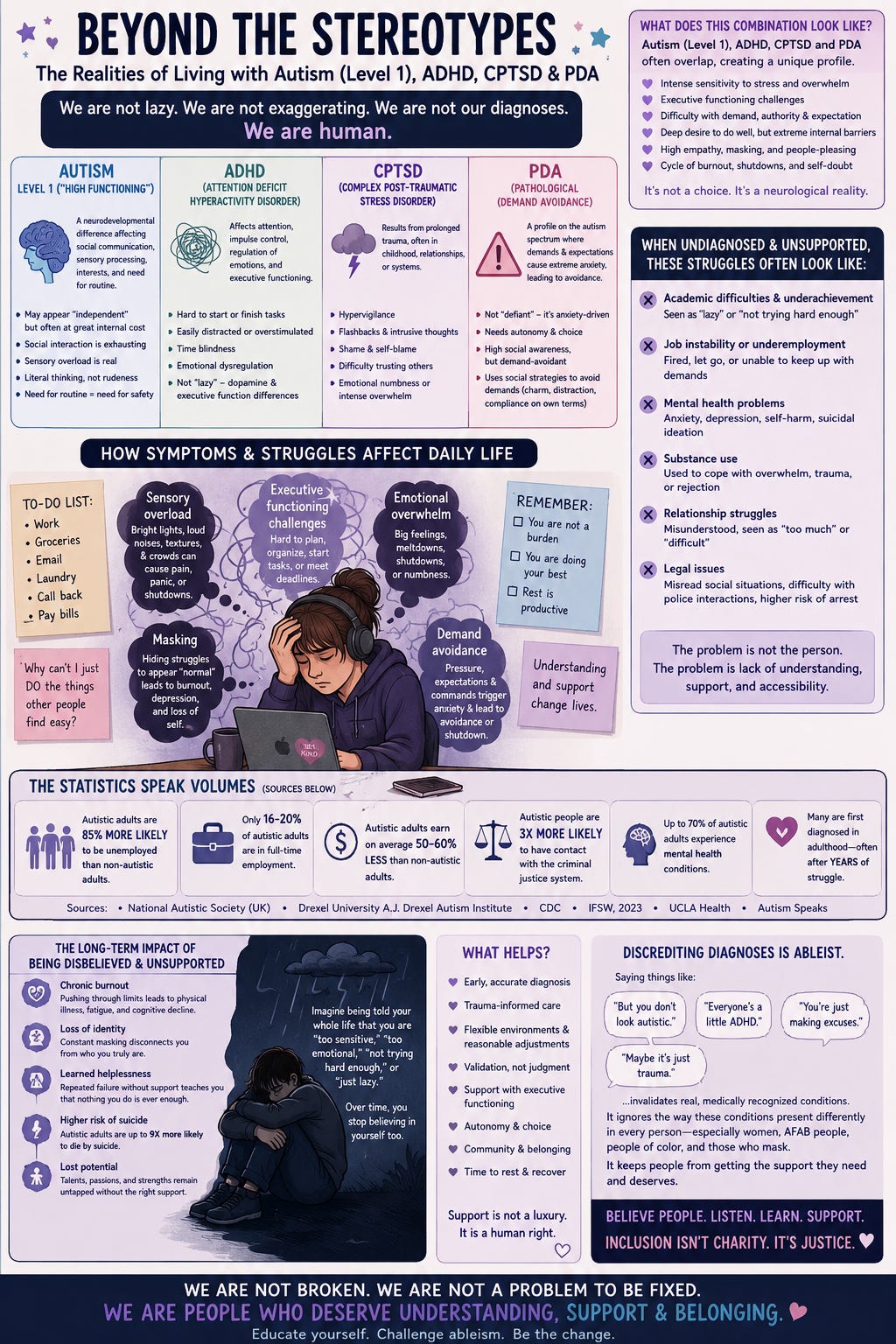
When you hear those explanations often enough, they stop sounding like accusations and start sounding like facts. They settle into the foundation of how you understand yourself. Over time, they become the lens through which every failure, every struggle, and every disappointment is interpreted.
For years, I believed I was failing at being a person.
Not because anyone sat me down and told me that directly, but because it seemed to be the only explanation available. If everyone else could do these things and I could not, then surely the problem must be me.
What I did not know was that I was trying to navigate a landscape I could not see.
I think about maps sometimes.
Imagine spending your entire life trying to find your way through a city using the wrong map. Every turn seems to lead somewhere unexpected. Roads appear where none are marked. Landmarks refuse to line up with what you're seeing. You become lost over and over again.
Eventually, you stop blaming the map and start blaming yourself.
You assume you're careless. You assume you're bad at directions. You assume everyone else must be better at navigating than you are.
Then one day someone places the correct map in your hands.
The city does not change.
The roads do not change.
The obstacles do not disappear.
You are still standing exactly where you were before.
But suddenly things make sense.
That is what diagnosis felt like for me.
Not the discovery of a new problem, but the discovery that the problem had been misunderstood.
The overwhelm I experienced wasn't evidence of weakness.
The burnout wasn't evidence of laziness.
The executive functioning struggles weren't evidence that I didn't care enough.
The difficulty with demands wasn't evidence of stubbornness or defiance.
Those experiences had always been real. What changed was the story I had been telling about them.
And stories matter.
The story that says you are lazy creates a very different life than the story that says your executive functioning requires support.
The story that says you are too sensitive creates a very different life than the story that says your nervous system processes the world differently.
The story that says you are difficult creates a very different life than the story that says you have needs that have gone unseen.
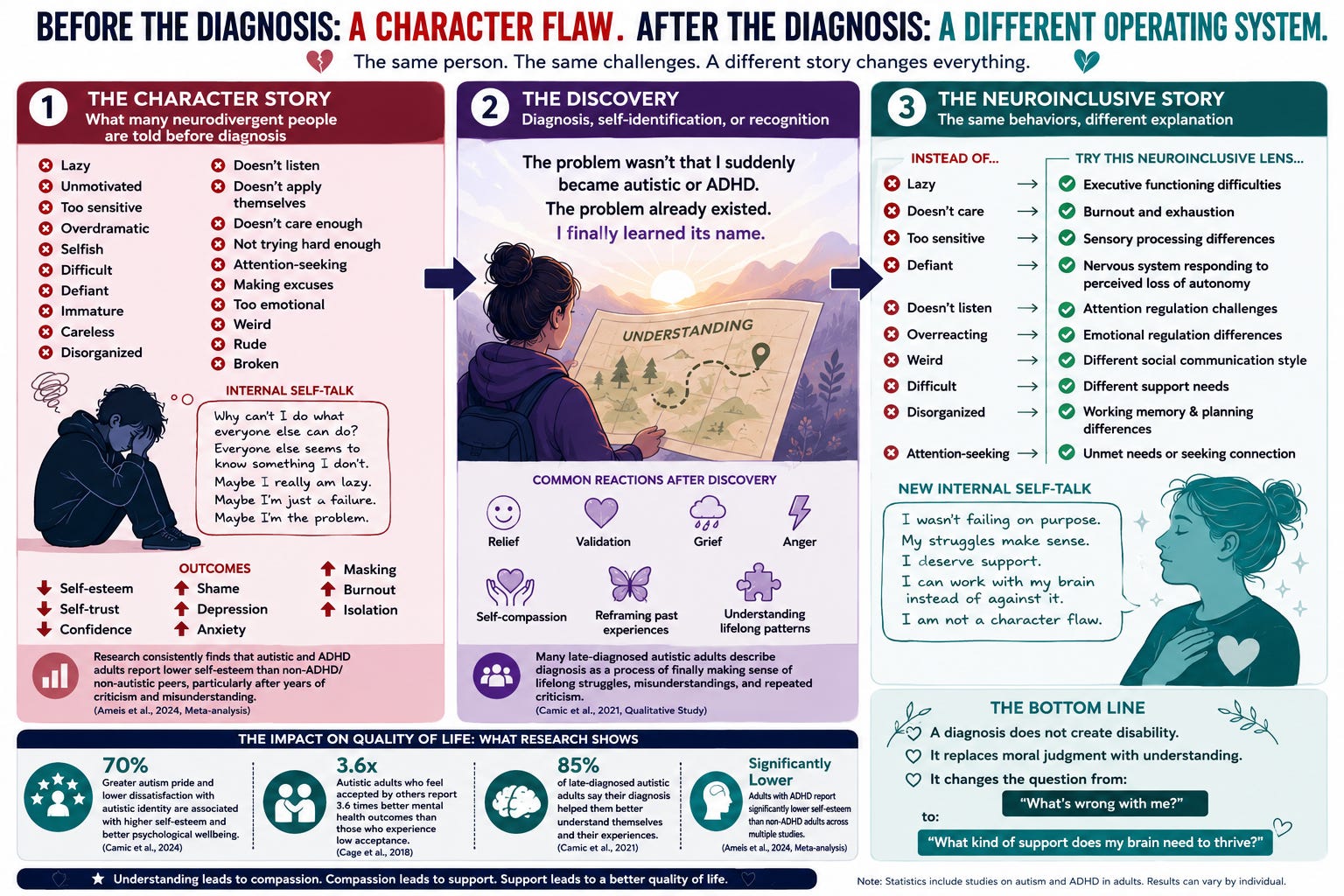
For me, diagnosis did not remove responsibility. If anything, it gave me the tools to engage with responsibility more honestly. I could finally stop fighting battles that were never mine to win and begin learning what actually helped.
I could stop asking why I wasn't someone else.
I could start learning how to be myself.
That shift has changed the way I speak to myself. It has changed the way I understand my past. It has changed the way I think about burnout, relationships, work, rest, and worthiness.
Most of all, it has changed the question I ask when I am struggling.
For years, the question was, "What is wrong with me?"
Now the question is, "What do I need?"
The answer is not always easy. Sometimes it is frustrating. Sometimes it asks me to acknowledge limitations I would rather ignore. Sometimes it requires accepting realities I wish were different.
But it is a kinder question.
And more importantly, it is a question rooted in truth.
The problem already existed.
The diagnosis did not create it.
The diagnosis simply gave it a name.
And sometimes having the right name for something is the difference between wandering in circles and finally finding your way home.