

Where Are All the Middle-Aged Tradwives?
I was once the nineteen-year-old bride who believed love required less of herself. Don't make the same mistakes I did.

This piece is shared freely. Upgrade your subscription to support my creative work.
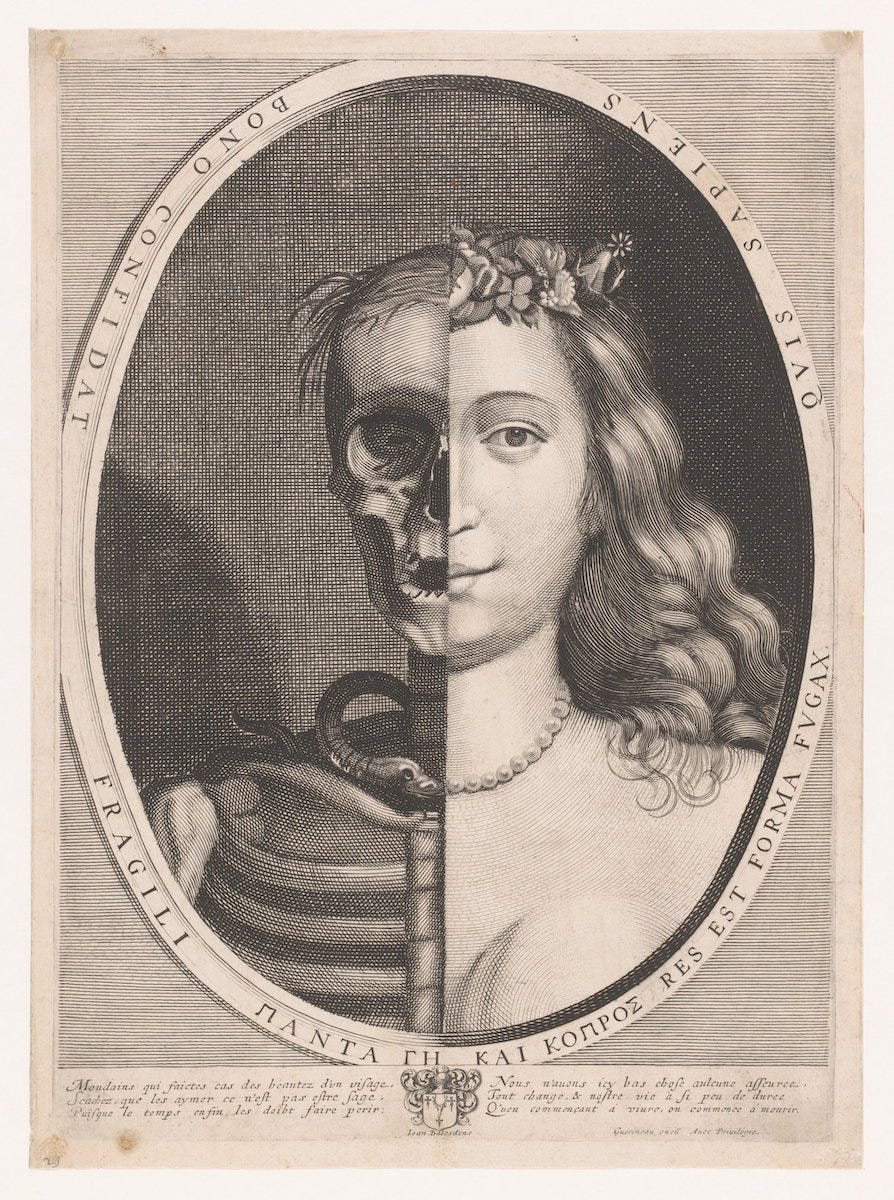
Lately I've been seeing people online ask the same question. "Where are all the tradwives twenty years later?" I'm sure it's mostly rhetorical.
But I decided to answer anyway!
They scroll through videos of young women in linen dresses kneading sourdough, homeschooling toddlers, and talking about biblical femininity. Then they wonder why they rarely hear from the women who actually lived that life and then reached middle age.
I think I might be one of the women they're looking for. I got married when I was 19 and he was 21. We wanted to do things right and in a “godly” way. I wanted a husband who loved me. He wanted a wife who did everything for him.
I'm thirty eight now. My daughters are teenagers. Long before anyone called it being a "tradwife," I was living what would now fit that label. Except we never used that word. In our home church, we called it being a “helpmeet”.
That word shaped nearly every part of my identity. A wife's purpose, we were taught, was to help her husband fulfill God's calling. We were to submit. We were to be quiet. We were to trust his leadership. Our highest calling wasn't to become ourselves; it was to become indispensable to someone else.
Women were expected to have babies, make a house into a home, and have everything in order before their husbands walked through the front door. A clean house reflected a faithful wife. A warm meal reflected a loving wife. A cheerful attitude reflected a godly wife.
Looking back, I realize there was very little discussion about what husbands owed their wives. Only what wives owed their husbands. At the time, I didn't question any of it.
I believed it with my whole heart. I really believed that God didn't give people more than they could handle. So I knew he wouldn't command women to uphold a standard they weren't capable of, right?
Right?
Every morning, I was the one who got up with the girls. We had two daughters, two years apart. I learned to function on broken sleep because that's simply what mothers did. My husband got up with them only a handful of times in our seven year marriage, and every one of those mornings felt like punishment.
Cabinet doors slammed.
Heavy sighs echoed through the house.
The girls were yelled at for acting like... well... little girls.
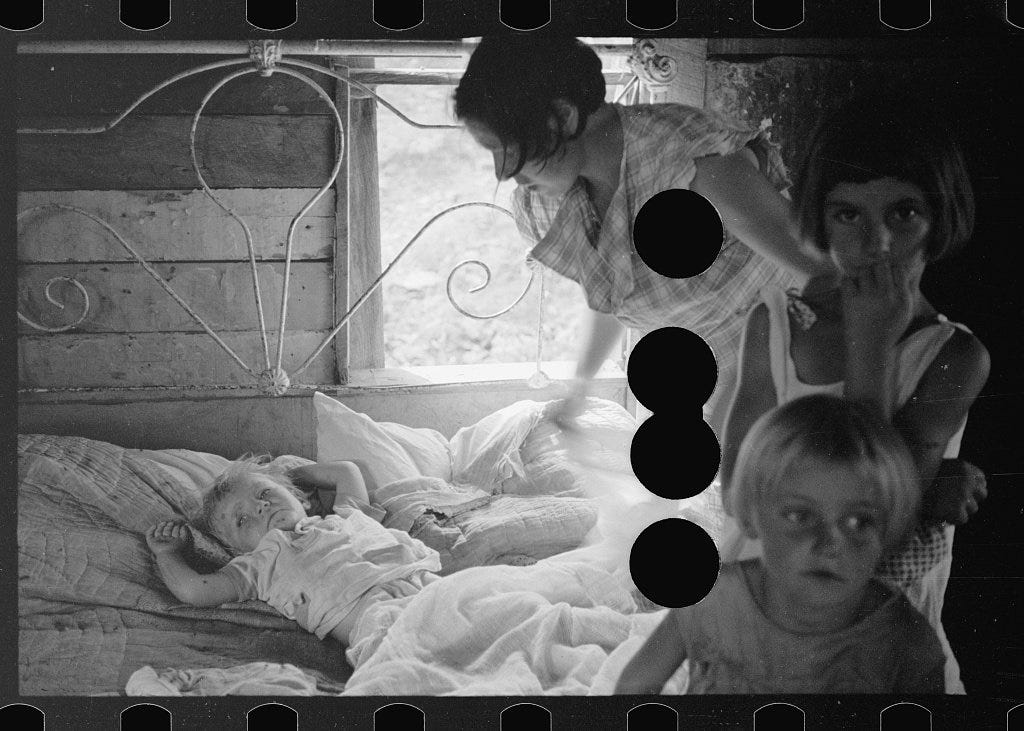
It wasn't simply that he disliked getting up early. It was that the entire house was made to feel the cost of asking him to help. Before long, I stopped asking. It was easier to lose sleep myself than to wake up to the tension he created.
I don't know if that was intentional.
I only know that it worked.
The same thing happened throughout our marriage. It's referred to as “weaponized incompetence” now. I didn’t have a name for it then.
I was expected to keep the house, care for the children, cook dinner, manage the invisible work of family life, and somehow do it all with joy because that's what a helpmeet was supposed to do.
If I cooked dinner while he watched the girls, I would walk back into a house that looked as though no one had done anything at all. Toys everywhere. Dishes untouched. Chaos waiting for me after I'd already made the meal.
The expectation wasn't that we shared the work.
The expectation was that I would eventually clean up whatever was left behind.
One memory still sits heavy with me all these years later.
I was in the kitchen making dinner while my husband was supposed to be watching the girls. Instead, he was in another room playing his guitar.
Somewhere in those few minutes, our toddler left a colored pencil on the floor. Our baby found it. She fell with it in her mouth and the pencil stabbed the back of her throat.
The panic of that moment is something I still remember in my body.
Thankfully, she survived.
But I remember standing there afterward thinking that I had been trying to do exactly what I had been taught a good wife should do—prepare dinner while my husband watched the children—and somehow the responsibility still landed on me.
That was the thing no one ever talked about.
Being a helpmeet didn't simply mean doing the housework. It meant carrying the mental load. Remembering appointments. Watching the children. Planning meals. Cleaning messes.
Anticipating everyone's needs before they were spoken.
And if something went wrong, somehow feeling responsible anyway.
There were beautiful moments too. I loved rocking my babies to sleep. I loved reading bedtime stories. I loved baking, decorating for holidays, making our home feel warm and safe.
I still love those things.
Domestic work was never the enemy. I just couldn't understand why I was the only one doing it.
And the problem was that I slowly stopped existing outside of it.
By the end of my marriage, our home church had become something I can only describe as cult-like. Obedience mattered more than honesty. Questioning leadership became rebellion. My own instincts were treated as something to suppress rather than something to trust.
I wasn't trying to become a tradwife. I was trying to become a faithful helpmeet. There is a difference.
One is an internet aesthetic. The other was my entire identity and a faithful spiritual calling.
When my marriage ended, I didn't just lose my husband. I lost the role I had spent years believing God had created me to fulfill.
Rebuilding meant asking questions I had never allowed myself to ask before.
Who am I if I'm not someone's helpmeet? What do I believe because I chose it, and what did I believe because I was told to? Can I still love homemaking without believing it is the measure of my worth?
Today, almost forty, I think the answer is yes.
I still believe there is dignity in caring for a home. Caring for children and lovers.
I still believe meals made with love matter. I still believe children deserve parents who are present. But I no longer believe women were created to disappear into those roles.
Partnership is not the same thing as servitude.
Love is not measured by how much of yourself you can erase. So when people ask where all the middle-aged tradwives are, I have an answer.
Some of us are still cooking homemade meals. Some of us are recovering from marriages that asked us to become less and less of ourselves in the name of becoming more faithful. Some of us are learning, for the first time, that God never asked us to disappear. We only thought He did.
People ask where all the middle-aged tradwives are. Some of us didn't simply grow older. Some of us paid for that life with our bodies.
With chronic illnesses and autoimmune disorders. With substance use disorders and failing mental health. With fatigue and burnout and chronic pain. With undiagnosed disorders and undisclosed sexualities andgender identities we don't come to terms with until later.

I'm tired now in a way that sleep doesn't fix.
Bone tired.
The kind of exhaustion that settles into your nervous system after years of carrying the emotional weight of a family, walking on eggshells, surviving abuse, and believing your value was measured by how much you could endure. It is the kind of fatigue that lingers long after the marriage ends.
People often imagine that divorce is the finish line.
For me, it was another beginning.
Family court consumed years of my life. Every hearing felt like another piece of me being carved away. The marriage had already left me depleted, but the custody battle hollowed me out completely.
The abuse didn't end when the marriage ended.
It changed shape.
There came a point when I was barely functioning. Years of chronic sleep deprivation had finally caught up with me. Then I survived another rape. My already-fragile nervous system collapsed into what I now understand was profound autistic burnout and psychological crisis.
I needed help.
Instead, my vulnerability became evidence against me.
Earlier in our divorce, I had insisted on joint custody. He had repeatedly pushed for me to take the girls full time, but I believed parenting should be a shared responsibility. Looking back, it felt as though that insistence came with consequences I never anticipated.
When I sought treatment during one of the darkest periods of my life, he filed for emergency custody. In court, my mental health was presented as proof that I was unstable. The context—the years that had led me there, the trauma, the exhaustion, the abuse—seemed to disappear.
What remained was a woman in crisis.
And that was enough.
I have spent years wondering how differently my life might have unfolded if someone had asked not only, "What is wrong with her?" but also, "What happened to her?" That is a very different question.
Today, when people ask where all the middle-aged tradwives are, I think about women like me. Women who devoted themselves to marriages they believed would last forever. Women who built homes with their own hands. Women who disappeared so completely into the role of wife and mother that when everything fell apart, there was almost nothing left to catch them.
We are here.
Some of us are rebuilding careers we never expected to need. Some of us are grieving children we are not allowed to love. Some of us are learning that surviving is its own kind of courage.
And some of us are still trying to remember the woman we were before someone convinced us that becoming smaller was the same thing as becoming godly.
Eventually, in the middle of all that exhaustion and grief, I signed over custody of my daughters.
People often ask why a mother would ever do something like that. The answer is both simple and impossible to explain.
I wasn't giving up on my children.
I was giving up a fight I no longer had the strength to survive.
He had already filed for full custody. I don't know what outcome he expected, but I don't think he expected me to sign over sole custody without continuing the battle. At that point, years of litigation, trauma, sleep deprivation, abuse, and psychological collapse had left me with almost nothing. I believed I was choosing the option that would create the least conflict for my daughters, even if it broke my own heart.
What followed was a different kind of loss.
Over time, I saw my relationship with my girls grow smaller. Visits became more difficult. I was told they could only happen under supervision, and those supervisors charged fees I simply could not afford except every few months. Poverty became another barrier between a mother and her children.
Months turned into years and distance became normal.
Eventually, after years of tension and divided loyalties, my daughters asked me to stop trying to be part of their lives. People hear that sentence and immediately look for someone to blame.
The truth is more complicated. I don't blame my daughters, although I'm sure they blame me.

Children should never have to carry the burden of adult conflict. If every interaction with one parent means more stress, more arguments, more court orders, more emotional upheaval, eventually peace starts to feel safer than connection. I understand why they chose peace, even if it came at the cost of losing me.
So I quietly exited stage left.
Not because I stopped loving them. Because loving them sometimes meant refusing to ask them to carry one more impossible burden.
People ask where all the middle-aged tradwives are.
Some of us are mothers whose children are still alive, yet absent from our daily lives. Some of us built homes that no longer belong to us. Some of us spent years believing that if we were faithful enough, sacrificial enough, submissive enough, our marriages would be safe.
Mine wasn't.
Being a traditional wife couldn't save my marriage because my husband simply did not value me.
And perhaps that should not surprise me.
When an entire culture teaches men that a wife's purpose is to serve, to submit, to endure, and to disappear into his calling, it becomes frighteningly easy to stop seeing her as someone whose inner life matters just as much as your own.
I don't believe God asked me to become smaller.
I think people did.
It has taken me nearly forty years to learn the difference.
To the Nineteen-Year-Old Tradwife
Little sister,
before you stitch your name
into someone else's life,
leave one thread
in your own hands.
You'll be told
that love is measured
by how much you can carry,
how little you complain,
how quietly you disappear.
They'll call it virtue.
They'll call it wisdom.
They'll call it God.
Be careful
what people baptize
in His name.
Bake the bread.
Plant the herbs.
Rock the baby
through the night.
Sweep the floors.
Light the candles.
Fold the towels
clean and white.
Homes are holy.
Work is worthy.
Love can live
in simple things.
But never let them
chain your soul
to what your labor brings.
Keep your laughter.
Keep your paycheck.
Keep the dreams
you've always known.
Keep your friendships.
Keep your calling.
Keep one thing
that's yours alone.
For a cage
lined up with roses
is a cage
all the same.
Even sacrifice
can become
another name
for being tamed.
Watch the man
when life is heavy,
not when life
is sweet and new.
Watch how anger
fills a doorway.
Watch what hardship
draws from him.
Love is proven
less by flowers
than by ordinary hours,
when the dishes
fill the sink
and neither one
has slept a wink.
If his comfort
costs your freedom,
count the price.
If his leadership
requires your silence,
think twice.
If your world
grows ever smaller
while his stretches
toward the sun,
ask yourself
whose kingdom
is being built—
and for whom.
God does not
grow mighty forests
by commanding
every tree
to bend itself
into another's shadow,
never reaching
to be free.
He gives each one
its roots,
its branches,
room to drink
and room to rise.
Love should never
ask you
to become
half your size.
So marry,
if you choose.
Bake the bread.
Raise the babies.
Build a home
with weathered hands.
But marry someone
who washes dishes
without applause,
who wakes with crying children
without resentment,
who sees your heart
before your service,
and your personhood
before your usefulness.
Little sister,
if one day
you must choose
between losing yourself
and losing your marriage;
Save yourself.
Because the woman
who survives
will need someone
to come home to.
Lindsay I am so sorry you had to go through all of this. We don't know until we know. And yes, it was people who did this to you. I am happy you know that now. Blessings to you. ❤️
Oh, girl. 🫶 I hear you. Insurmountable debt, years spent on housework, trying to get through schooling to career and encountering administrative delays that I couldn't afford to wait out... because he wouldn't finance the gap... working full time and managing kids and chores only to be told "you were never an equal partner, Kathy." 🤷♀️ I think the arrangement is just and centered, I like Moms at home. But we deserve a financial safety net that doesn't depend on one man. Our labor goes unpaid. And then we are told we didn't plan for retirement. It's nasty. Thank you for naming the gap, good read. 🌷 You deserve peace. ☮️